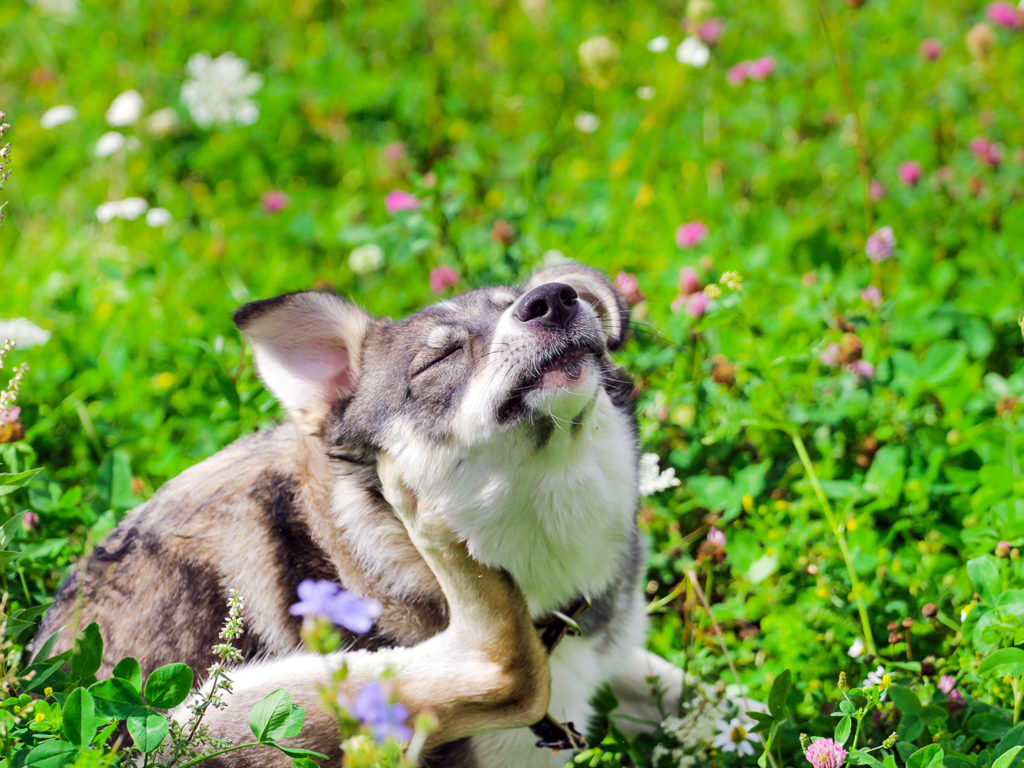
For many people and pets, spring (aka “allergy season”) is a time of excessive sneezing, itching, and scratching. For some pets, however, their allergy season is never ending, lasting into summer, fall, and winter.
Veterinary dermatologist Dr. Adam Patterson, a clinical associate professor at the Texas A&M College of Veterinary Medicine & Biomedical Sciences, discusses allergic skin disease and how to best relieve the itch for affected pets, which can include dogs, cats, horses, and other species.
“Environmental allergy, aka atopic dermatitis, is a skin condition in which the immune system overly reacts to the pollens of grasses, trees, and weeds, as well as to indoor substances like house dust mites, mold, and dander,” he said. “Clinical signs may be seasonal or year-round in presentation.”
Of these allergens, the most common to affect pets in central Texas are dust mites and grasses, as well as cedar and oak pollen. Many pets are also allergic to flea bites, which can perpetuate the effects of atopic dermatitis.
Unlike people who experience lots of sneezing and runny eyes with allergies, pets’ main sign of atopic dermatitis is itching. In addition to scratching, pets may try to relieve an itch by rubbing, licking, chewing, biting, head shaking, or scooting.
“Common itchy body areas include the face, ears, paws, armpits, groin, rump, and anal region,” Patterson said. “Every pet has its own itch tolerance, which means the intensity and reason(s) for your pet’s itch may not be the same as another animal.”
Recurring bacterial and/or yeast skin infections—which appear as red and/or black skin, red bumps, pimples, scabs, dander, hair loss, or thickening skin—often accompany allergic skin disease. Similarly, owners may also notice recurring ear infections that cause itchy red and swollen ears that may leak pus.
If a pet is showing any of these signs, a veterinarian can help determine the various causes.
If atopic dermatitis is determined to be the cause, in addition to itch relief medications, initial treatments may include baths, flea prevention, and anti-infection medication, as well as a possible change in diet.
“Given the safety and effect of many allergy medications today, dogs in central Texas should have allergy signs for at least five to six months out of the year before considering skin testing for environmental allergies in order for the diagnostic tests and treatment to be cost effective over the long haul,” Patterson said.
If the condition is left untreated, it can have mild to serious consequences.
“It can cause unrelenting itch, odor, remodeling of the ear canal (an increase in skin thickness and collapse of the ear canal), and multi-antibiotic resistant bacterial skin infections,” Patterson said. “Ear canal removal, an expensive surgery, may be required.”
To avoid excessive, costly treatments and extra discomfort for your pet, make sure to talk to your veterinarian if your pet is showing signs of an environmental allergy to determine a plan, which could even include referral to a veterinary dermatologist. Getting rid of that annoying itch will help make spring, and possibly the entire year, more enjoyable for everyone.
Pet Talk is a service of the College of Veterinary Medicine & Biomedical Sciences, Texas A&M University. Stories can be viewed on the web at vetmed.tamu.edu/news/pet-talk. Suggestions for future topics may be directed to editor@cvm.tamu.edu.
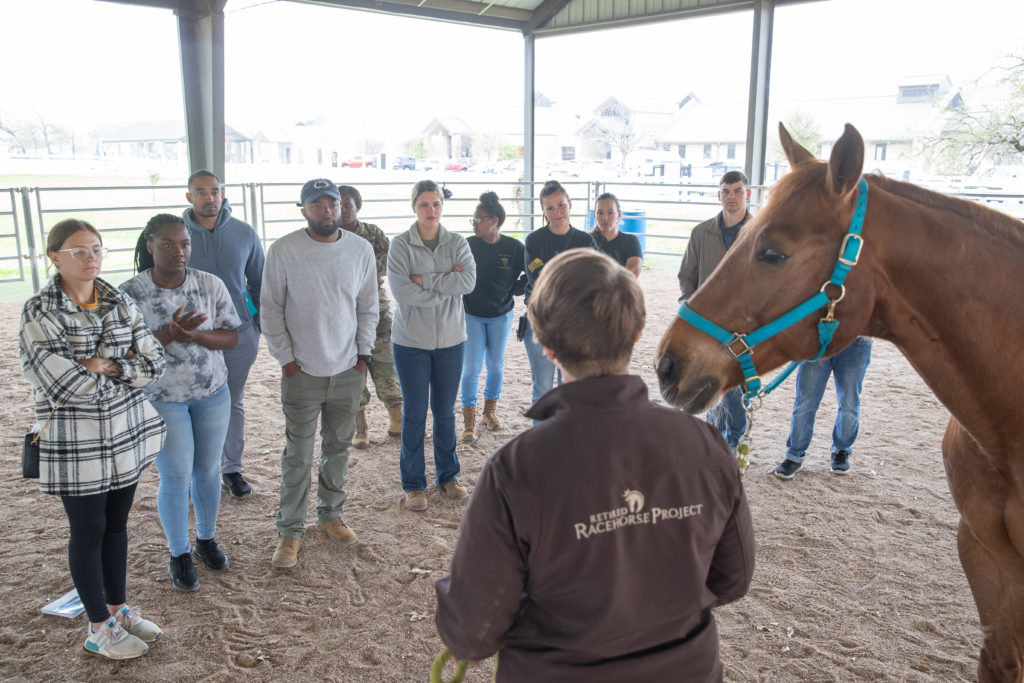
Dr. Shannon Reed teaches a group of Veterinary Corps members.
A continuing education event at the Texas A&M College of Veterinary Medicine & Biomedical Sciences (CVMBS) gave 34 United States Army Veterinary Corps (VC) members from across the country the opportunity to learn about equine medicine from CVMBS experts.
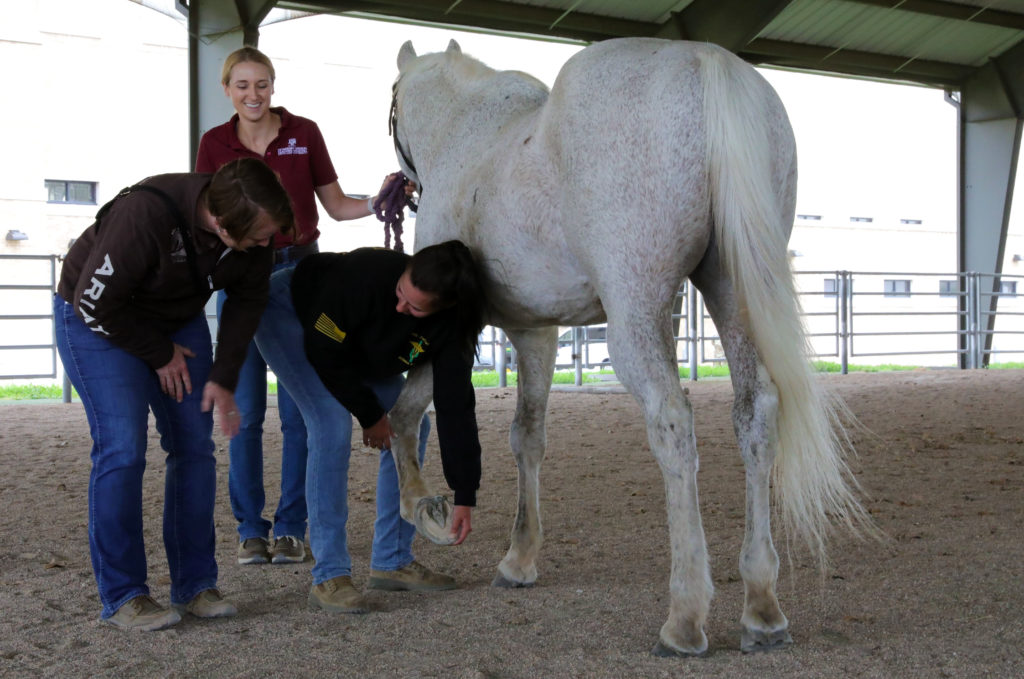
The event included one day of online webinars and one day of hands-on learning at the CVMBS, with sessions covering lameness exams, radiography, nerve blocks, dentistry, and colic exams.
“These are the common skills that they would see in general practice or in the field, and this was mainly a refresher and update on techniques,” said Dr. Amanda Trimble, a CVMBS clinical assistant professor of equine internal medicine. “A lot of them, at least the veterinarians, hadn’t performed some of these equine procedures since they graduated, which for some was 14 or 15 years ago. And for some of the technicians, these skills were new.”
Trimble and Dr. Kyle Johnson—a resident in equine practice at the Texas A&M Large Animal Teaching Hospital (LATH), VC officer, and operations officer for the 169th Medical Detachment (Veterinary Service Support)—worked with the U.S. Army post in Fort Hood to coordinate the event.
“Given the breadth of resources at the college, including equipment and personnel, we determined that hosting an in-person event would allow for the delivery of high-quality, hands-on, equine-centric veterinary training,” Johnson said.
Army veterinarians and veterinary technicians from across the nation receive hands-on instruction on proper horse veterinary procedures from experts at Texas A&M. U.S. Army Photo by Sgt. Rigo Cisneros
Although VC veterinarians and veterinary technicians tend to spend more time treating small animals like military working dogs and the pets of service members, they are still responsible for caring for military working equids, like the more than 50 horses in the 1st Cavalry Division Horse Cavalry Detachment at Fort Hood. These horses participate in ceremonies and events, support the Army’s public relations and recruiting efforts, and help preserve the Cavalry’s historic traditions.
Trimble hopes to expand the CVMBS’ partnership with Fort Hood in the future to provide more opportunities for current VC members and veterinary students interested in joining after graduation.
“Because Fort Hood is right in our backyard and A&M has this strong military history, this collaboration could benefit not only the Veterinary Corps and our military but also us and our students,” Trimble said. “We could potentially have the opportunity to go out there and help them with their horses and provide educational opportunities for everybody.”
Other CVMBS faculty and residents who participated in the event include Drs. Wesley Bissett, Cleet Griffin, Alexis Jennings, Martha Julien, Dustin Major, Katherine Maples, Taylor Myers, Shannon Reed, Bridget Savitske, Brian Shoemake, Jake Trautmann, and Gustavo Zanotto.
###
For more information about the Texas A&M College of Veterinary Medicine & Biomedical Sciences, please visit our website at vetmed.tamu.edu or join us on Facebook, Instagram, and X.
Contact Information: Jennifer Gauntt, Director of VMBS Communications, Texas A&M College of Veterinary Medicine & Biomedical Sciences, jgauntt@cvm.tamu.edu,979-862-4216
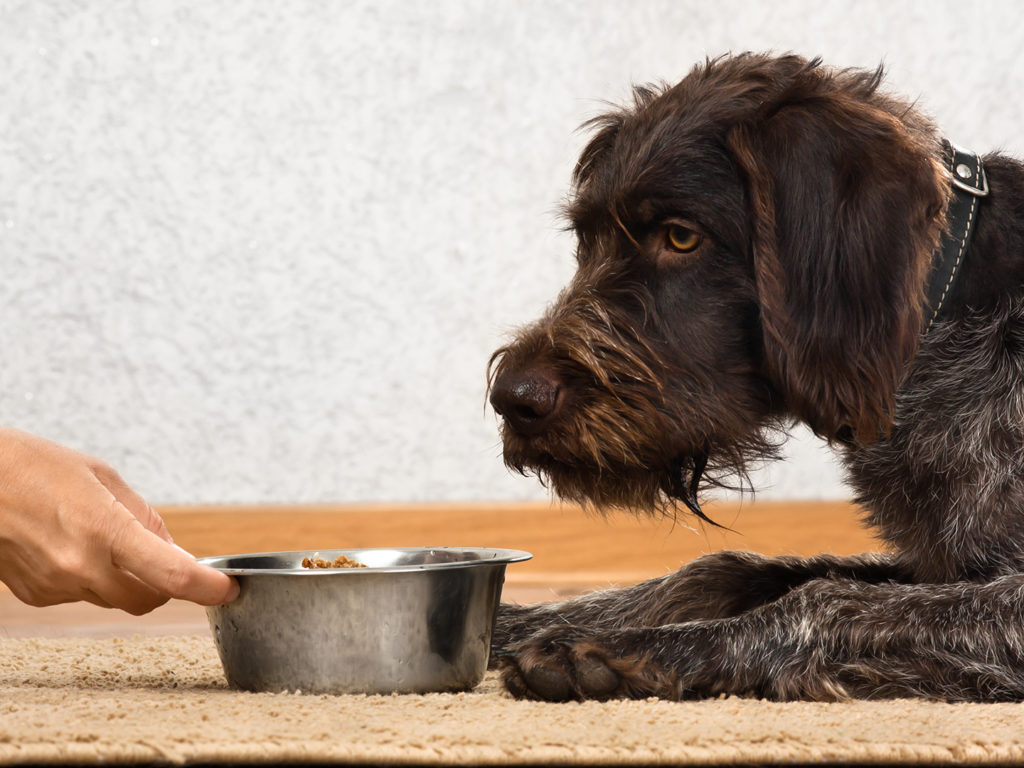
When dealing with pain, illness, or stress, some pets choose to stop eating no matter how many enticing meals they are offered. In certain cases, because a lack of nutrition can lead to serious health complications, veterinarians can suggest using a feeding tube until the pet begins to eat on its own again.
Feeding tubes can be used short-term while a pet recovers from disease or surgery or long-term for an animal with a chronic illness.
Dr. Johanna Heseltine, a clinical associate professor at the Texas A&M College of Veterinary Medicine & Biomedical Sciences, says that while feeding tubes can be a scary concept for pet owners, they are actually easier to manage than you might imagine.
Feeding tubes are generally recommended when a pet has not eaten in three or more days. The tubes can be used to provide food, water, and even medications.
“An important benefit is that most oral medications can be given through a feeding tube,” Heseltine said. “For cats or dogs that are difficult to medicate, this can greatly reduce the stress for the pet and owner. Water can be given through the tube as well, which is helpful for certain patients that need extra water, such as those with kidney disease.”
The three main types of feeding tubes are nasoesophageal (NE) tubes, esophageal (E) tubes, and gastrotomy (G) tubes.
NE tubes are very small tubes that go through the nose and into the esophagus; they are typically only used in-hospital. E tubes enter the esophagus from a tiny incision on the side of the neck, while G tubes go directly into the stomach through a small incision on the side of the abdomen.
While NE and E tubes can be used for short-term cases, G tubes must stay in place for at least two to three weeks for a seal to form where it enters the stomach. Both E and G tubes can be used for many months, as long as no infection or other issues arise, and are typically easy for an owner to learn how to use.
“Feeding your dog or cat through an E or G tube is not difficult to learn, but it may seem a bit strange at first,” Heseltine said. “It helps if you stay calm and make your pet feel relaxed. Often it also helps to have a second person pet the cat or dog so they stay still during the feeding.”
Any canned food can be used for tube feeding as long as it is blended with water to create a smooth and thin consistency. Heseltine often recommends choosing a high-calorie diet so that it can be given less frequently.
“It is important to go slowly when feeding. Generally, the feeding is done over a period of 20 to 30 minutes,” she said. “When it is done this way, the feeding should not be uncomfortable for the pet. You should also watch for any signs of nausea (such as gagging, drooling, and lip licking), which tells us that we need to stop feeding or go more slowly.”
Owners can also reduce discomfort by using room-temperature food; cold food can cause stomach upset and hot food can cause burns inside the digestive tract. If the food has to be warmed, Heseltine recommends using a warm water bath instead of a microwave.
“After the tube feeding, spend a little time petting and talking to your cat or dog to help make the whole experience a positive one,” she said.
Owners will need to keep the tube’s entrance site clean and watch for signs of infection; many special collars and pet shirts are available to help keep the tube in place and prevent the pet from picking at it.
“If the cat or dog starts eating on its own after an E tube is in place (or G tube, if it has been in place at least two to three weeks), we recommend leaving it in until the pet has been eating the full daily calorie requirement on their own for at least a week,” Heseltine said.
No matter how daunting feeding tubes may seem, a veterinarian can help you learn the process so that your pet can feel good and be healthy again.
“For my own pets, I have used feeding tubes three times to get them through major medical conditions,” Heseltine said. “It can be very stressful trying to get your pet to eat and take medications, but a feeding tube puts you back in control.”
Pet Talk is a service of the College of Veterinary Medicine & Biomedical Sciences, Texas A&M University. Stories can be viewed on the web at vetmed.tamu.edu/news/pet-talk. Suggestions for future topics may be directed to editor@cvm.tamu.edu.
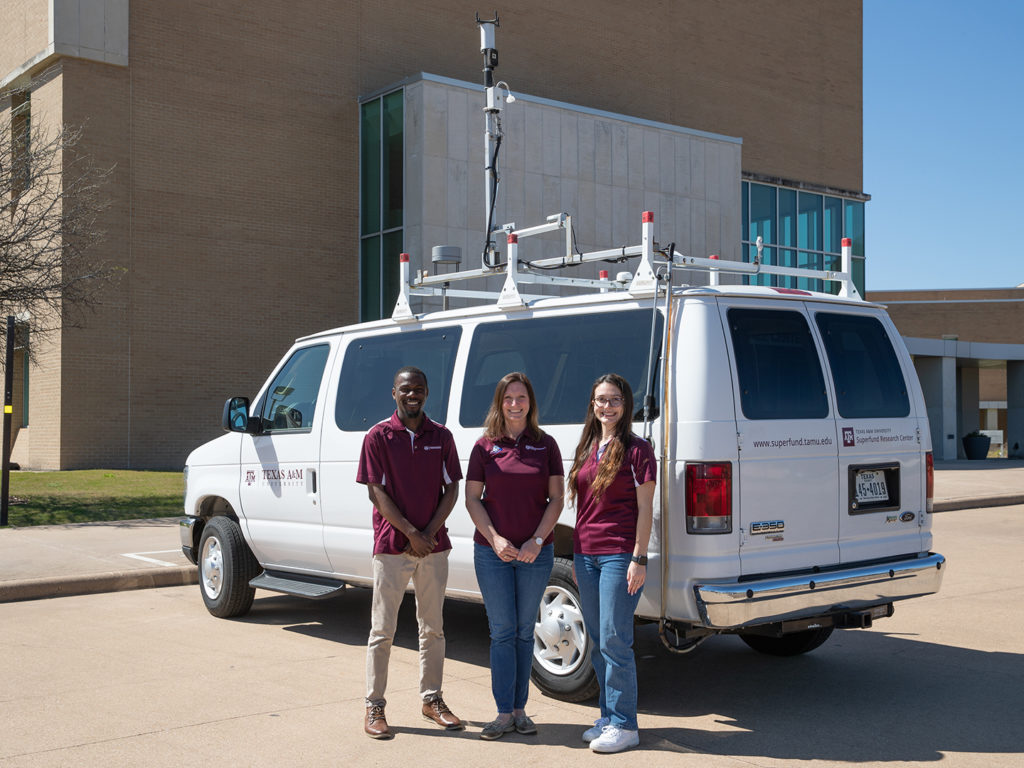
Toriq Mustapha, Dr. Natalie Johnson, and Mariana Saitas will use mRAPiD to inform communities about airborne chemical pollutants.
Texas A&M University’s new mRAPiD air quality testing van, a collaboration between the Superfund Research Center and School of Public Health, will give researchers and communities the ability to detect hazardous chemical air pollutants in real time, while on location.
mRAPiD, which stands for “mobile Responding to Air Pollution in Disasters,” was developed for responding to disaster events that include the release of airborne pollutants. It will provide immediate, hyperlocal air quality information to potentially exposed populations, including first responders.
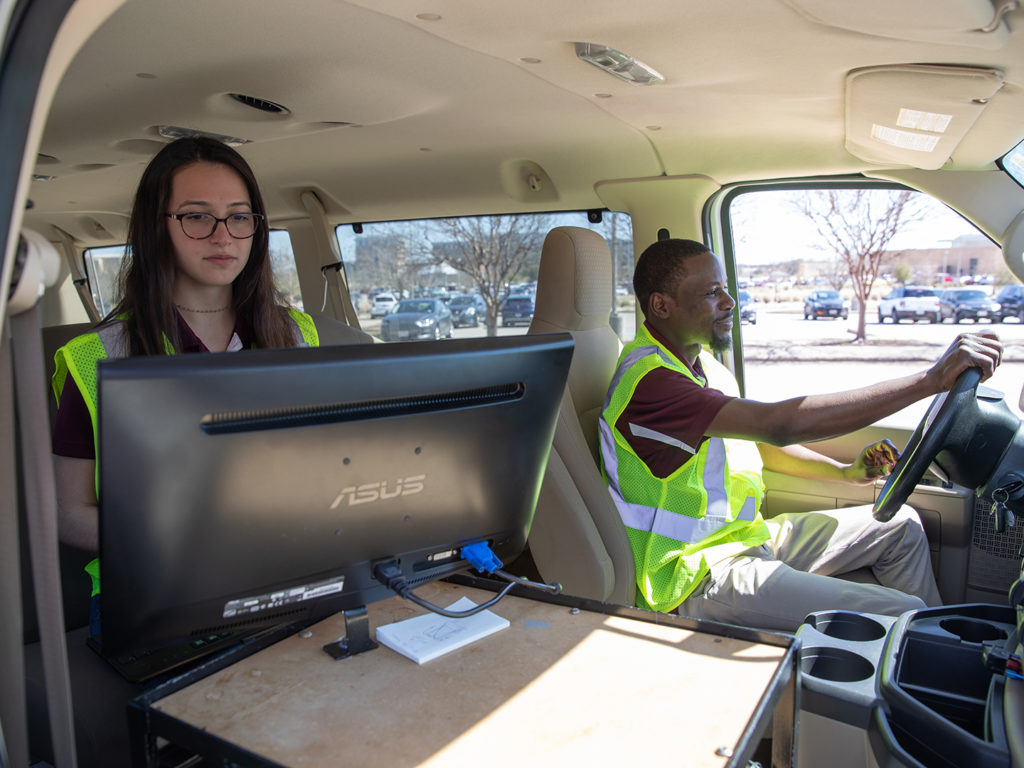
The van is equipped with a highly sensitive instrument that allows it to detect a wide range of chemical pollutants and offer real-time results that are linked with the van’s specific location.
The van is funded by a grant through Texas A&M’s Research Development Fund awarded to Drs. Natalie Johnson and Thomas McDonald, at the School of Public Health, and Dr. Ivan Rusyn, director of the Superfund Center.
“This whole idea really came about after a couple of large-scale disasters, one of which was Hurricane Harvey. There were emissions of benzene, which is a known carcinogen and respiratory irritant, in the Houston area,” Johnson said. “Dr. Ivan Rusyn, Dr. Tommy McDonald, and I initiated the grant through A&M to acquire the equipment and van so we would be able to be a statewide resource to respond to similar pollution events following disasters.”
Texas currently has a network of stationary air quality monitors throughout the state, but these typically only measure for solid particles (like dust and smoke) and some gas phase pollutants (like ozone) but not the larger range of volatile air toxics that mRAPiD detects.
These pollutants are mainly composed of hazardous volatile organic compounds (VOCs), which are human-made chemicals that are constantly released into the air—through gasoline and diesel emissions, industrial emissions, dry-cleaning, tobacco smoke, and building materials, including paints and varnishes—and contribute to a baseline level of VOCs in the atmosphere.
Saitas and Mustapha demonstrate mRAPiD’s ability to run tests on location and offer real-time results.
A sudden increase in VOCs following environmental disasters or industrial accidents is of major concern because they can cause a variety of short- and long-term health effects in people, from eye irritation and nausea to organ damage and cancer.
In addition to disaster response, the van will be used for routine air sampling by the Superfund Center to support ongoing research projects and, when requested, exposure assessments for specific communities, which will be led by Dr. Garett Sansom, of the School of Public Health.
“We’re going to start by doing baseline sampling in the greater Houston and Galveston area because that’s where a lot of the Superfund Center’s ongoing work and community outreach is occurring,” Johnson said. “Unfortunately, it’s not a matter of ‘if’ another hurricane will occur, but when it will occur. We want a good idea of the normal background levels so we can make comparisons following any environmental disasters.”
Johnson, an inhalation toxicologist, will be using the van’s ability to help establish baseline levels of VOCs for a project focused on determining how the chemical pollutants affect children with asthma, the leading chronic disease in childhood.
“I’m really passionate and concerned about asthma and the increased risk for respiratory infections caused by air pollutants,” Johnson said. “We want to make sure that we know what a safe level is so we prevent any extreme infections or risks for development or exacerbation of asthma.
“One of the best ways we can do our toxicity testing is to know what’s happening with the real-world mixtures,” she said. “The idea is that we would go out into communities, collect samples, and come back in our lab and not only test one chemical like benzene that we know contributes to respiratory distress and dysfunction, but we could also look at a range of those real-world mixtures and then do chemical-based screening with lung cells.”
Specific resources in the van include a proton transfer reaction mass spectrometer for analyzing trace gases; metrological equipment to measure wind speed and direction, temperature, and relative humidity; and an on-board GPS system.
###
For more information about the Texas A&M College of Veterinary Medicine & Biomedical Sciences, please visit our website at vetmed.tamu.edu or join us on Facebook, Instagram, and X.
Contact Information: Jennifer Gauntt, Director of VMBS Communications, Texas A&M College of Veterinary Medicine & Biomedical Sciences, jgauntt@cvm.tamu.edu,979-862-4216
Two staff members from the Texas A&M College of Veterinary Medicine & Biomedical Sciences (CVMBS) were recognized for their commendable service to the university with 2022 President’s Meritorious Service Awards.
“Recipients of this highly prestigious award have demonstrated their commitment to the Aggie core values of excellence, integrity, leadership, loyalty, respect, and selfless service,” said Texas A&M University President M. Katherine Banks. “To each of them, I extend my most sincere congratulations and deep appreciation for their efforts that make Texas A&M University such a great institution.”
Hinton and Zachgo will be recognized at an awards ceremony on April 25 in the Memorial Student Center’s Bethancourt Ballroom. They will each receive a $1,000 award, commemorative plaque, and lapel pin.
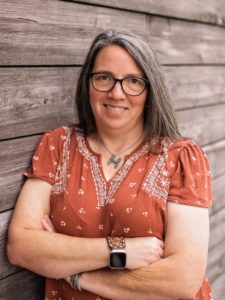
Elizabeth Hinton
Elizabeth Hinton
Hinton is known around the LATH for her willingness to help colleagues and patients whenever she can.
“She puts the needs of the patients, the hospital, and her teams above all else,” one nominator said. “She will oftentimes be here late or early to support the hospital. She is even available to her team when she is not here, if anything as encouragement for their efforts.”
As a supervisor, Hinton prioritizes her team’s wellbeing and strives to make each member feel valued and respected.
“Elizabeth treats every single person with respect every single day,” another nominator said. “She cultivates a culture where ideas and opinions are shared and given the respectful consideration they deserve. She has developed a mutual respect with not only her team but with other staff, faculty, and students in the hospital.”
In response to staffing challenges during the COVID-19 pandemic, Hinton established a leadership training program to mentor fellow staff members and teach them leadership skills like conflict management.
“This program has been so effective in the hospital that we are working to provide it for all supervisors,” another nominator said. “She did this independently because she saw a local need; she works tirelessly without any sense of entitlement.”
Hinton was also recognized with the CVMBS’ Pearl Enfield Staff Leadership Award in 2019.
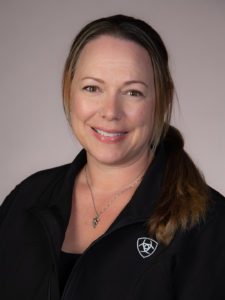
Mandy Zachgo
Mandy Zachgo
Zachgo has gone above and beyond her job expectations multiple times when she saw a need that she could fill.
“[When] the person who coordinates all testing and exams for our department retired immediately prior to the beginning of Fall 2021 semester, Mandy stepped in and took over this person’s responsibilities while continuing to perform her own duties,” one nominator said. “With excellence as her goal, Mandy worked extra hours to provide the same quality of service that the faculty were used to under the previous coordinator.”
Zachgo plays a key role in the CVMBS’ Aggie ACHIEVE course for students with intellectual and developmental disabilities (IDD), even going so far as to volunteer with the Courtney Cares hippotherapy program to encourage an Aggie ACHIEVE student to participate.
“Mandy is consistently kind and compassionate to all students,” another nominator said. “She respects them as unique individuals and goes out of her way to make all students feel welcome.”
As leader of the CVMBS’ Teaching Laboratory Support team, Zachgo works beyond normal expectations to prepare lab spaces for students and enhance their learning experiences.
“Mandy is the true epitome of the Aggie core values,” another nominator said. “The success of our classes and labs are a direct result of her preparation and the energy she has for our faculty and students.”
###
For more information about the Texas A&M College of Veterinary Medicine & Biomedical Sciences, please visit our website at vetmed.tamu.edu or join us on Facebook, Instagram, and X.
Contact Information: Jennifer Gauntt, Director of VMBS Communications, Texas A&M College of Veterinary Medicine & Biomedical Sciences, jgauntt@cvm.tamu.edu,979-862-4216
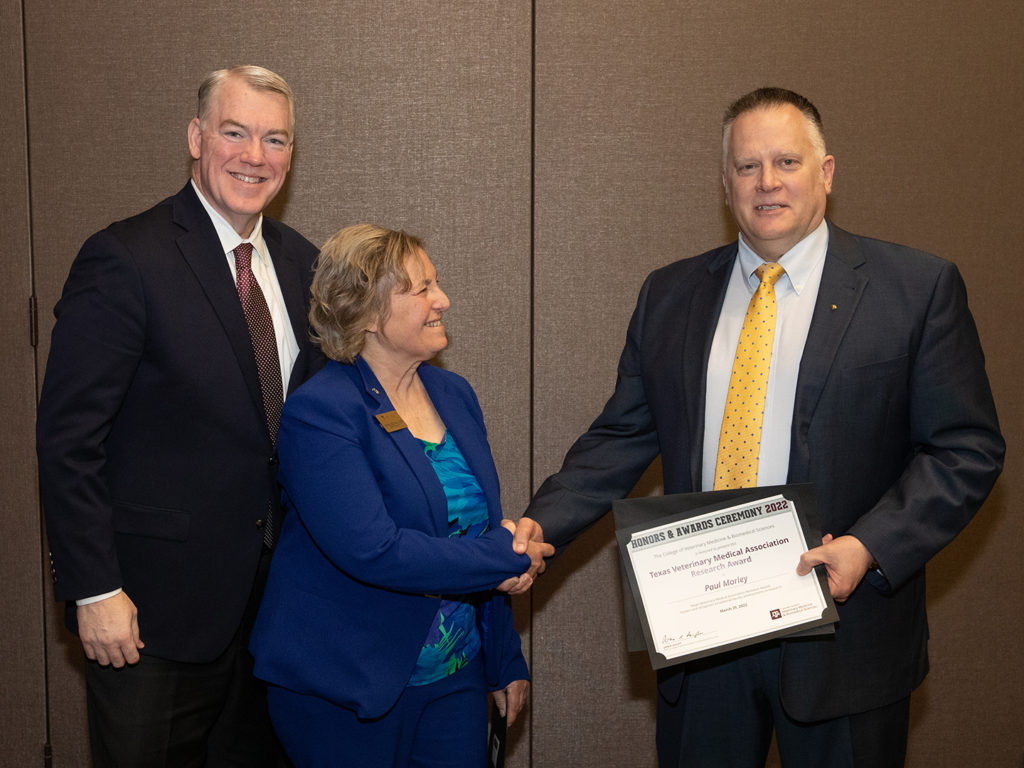
TVMA executive director Troy Alexander, TVMA president Dr. Tamra Walthall, and Dr. Paul Morley
Three faculty members from the Texas A&M Veterinary Education, Research, & Outreach (VERO) program were recognized for their research and teaching excellence at the College of Veterinary Medicine & Biomedical Sciences’ (CVMBS) 2022 Honors & Awards Ceremony.
Drs. Paul Morley, Benjamin Newcomer, and Matthew Scott received awards during the ceremony on March 25. Morley traveled to College Station to attend the event in person and accepted awards on Newcomer and Scott’s behalf.
“We are very proud of all that Drs. Morley, Newcomer, and Scott have accomplished for the VERO program and the recognition of this work at the CVMBS 2022 Honors & Awards Ceremony,” said Dr. Susan Eades, CVMBS associate dean for administration, Canyon campus. “These accomplishments exemplify the excellence in research and teaching performed by the great faculty in the VERO program. The teamwork and dedication demonstrated each day is powerful.”
Dr. Paul Morley
Morley, VERO’s director of food animal research, received the Outstanding Research Leader Award and the Texas Veterinary Medical Association (TVMA) Research Award for his research achievements and exceptional record of extramural funding and publications.
“Dr. Morley is leading an outstanding research team working to address health issues important to the cattle industries of the Panhandle,” Eades said.
His research interests include antibiotic resistance, infectious diseases in food animals, and improving infection control and biosecurity to manage health risks that are important in veterinary medicine, agriculture, and public health. He has contributed to 40 publications since the beginning of 2019.
Morley earned his Doctor of Veterinary Medicine (DVM) from Washington State University in 1989 and a Ph.D. from the University of Saskatchewan in 1995. He is a diplomate of the American College of Veterinary Internal Medicine and joined the VERO program in 2019.
Dr. Benjamin Newcomer
“These accomplishments exemplify the excellence in research and teaching performed by the great faculty in the VERO program. The teamwork and dedication demonstrated each day is powerful.”
Dr. Susan Eades
Newcomer, a CVMBS clinical associate professor, received the TVMA Teaching Award for his contributions as an educator.
As a dairy cattle veterinarian, he has a special interest in training students in the practical aspects of dairy science and dairy production management.
“Dr. Newcomer is not only an accomplished dairy cattle veterinarian but an excellent classroom and clinical teacher who impacts the education of veterinary and undergraduate students every day,” Eades said.
Newcomer received his DVM from the University of Florida in 2002 and practiced dairy production medicine for several years in California. He joined the Auburn College of Veterinary Medicine in 2008 as a clinical instructor while pursuing a Ph.D. in bovine infectious disease, and then joined the VERO program in 2020.
Dr. Matthew Scott
Scott, a CVMBS assistant professor of microbial ecology and infectious disease, received the Outstanding Young Faculty Research Award for his record of excellence in research, publications, and funding.
“Dr. Scott, in a very short time, has launched important projects evaluating risks of diseases affecting the cattle industry,” Eades said.
His work is focused on bovine respiratory disease (BRD), the leading disease complex in cattle, in an effort to develop pipelines for investigating and mitigating risk of BRD in high-risk settings, such as feedlots. He has received funding for multiple projects from the U.S. Department of Agriculture’s National Institute for Food and Agriculture.
Scott earned his DVM in 2018 and a Ph.D. in veterinary medical science – infectious diseases in 2021, both from Mississippi State University, before joining the VERO program in 2021.
###
For more information about the Texas A&M College of Veterinary Medicine & Biomedical Sciences, please visit our website at vetmed.tamu.edu or join us on Facebook, Instagram, and X.
Contact Information: Jennifer Gauntt, Director of VMBS Communications, Texas A&M College of Veterinary Medicine & Biomedical Sciences, jgauntt@cvm.tamu.edu,979-862-4216
While many animals—including humans—have harmless strains of E. coli living inside their gastrointestinal tracts, a dangerous form that often makes headlines is E. coli 0157, which can cause serious illness in people.
Although E. coli 0157 outbreaks are usually caused by contaminated vegetables, meats, or other foods, these bacteria can also be spread by live animals.
Practicing good hygiene around animals is one of the best ways to prevent an E. coli infection, according to Pam Douglas, infection control coordinator at the Texas A&M College of Veterinary Medicine & Biomedical Sciences’ Veterinary Medical Teaching Hospital.
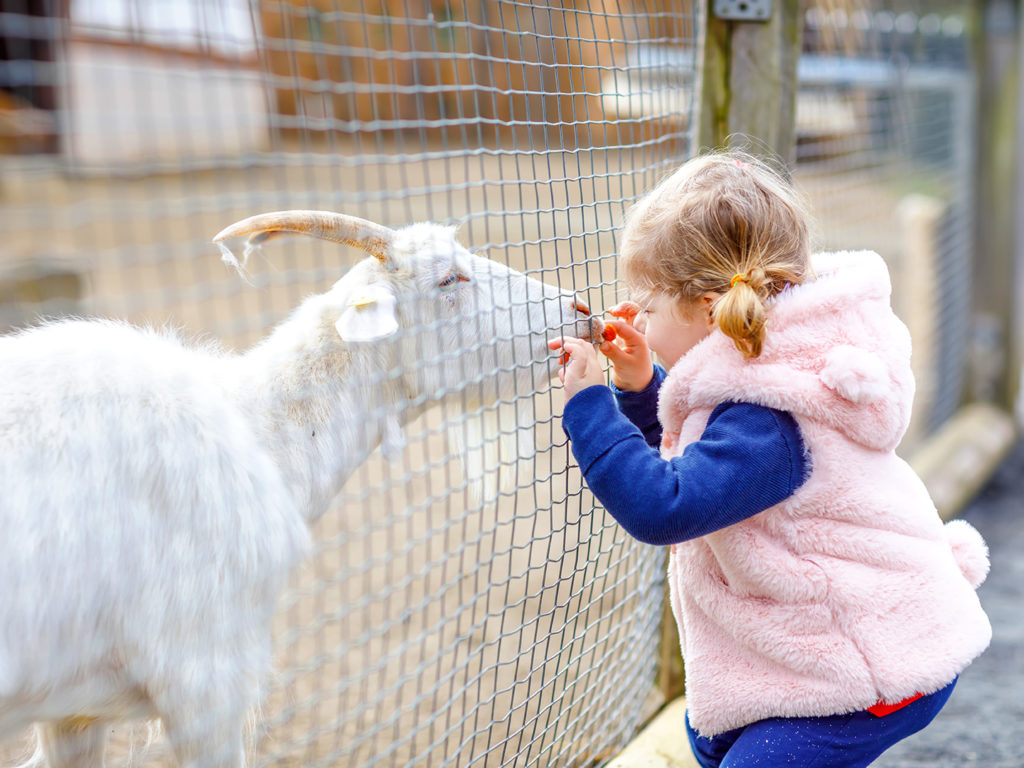
“Animals like cows, goats, sheep, and deer can carry E. coli in their stomachs and shed the germs in their feces,” Douglas said. “The germs can live on their skin or fur and in the areas where they live or are housed.”
The most common symptom of E. coli infection in animals is diarrhea, but the bacteria often do not cause any signs of illness; therefore, even if an animal looks healthy and clean, and even if it is your own animal, there is still a chance it can spread the bacteria.
“People can get E. coli when they touch an infected animal or a contaminated surface and then their mouths,” Douglas said. “The best way to prevent E. coli infection is to wash your hands.”
The best course of action is to wash your hands as soon as possible after touching animals, their food, or any supplies in their environment; after visiting places like petting zoos and farms where animals live and roam (even if you did not touch an animal); and after removing shoes and clothes that have been worn around animals or their environments.
“Other ways to stay healthy include not eating, drinking, or preparing food around animals, as well as cleaning the areas where animals have been,” Douglas said.
If an owner notices that their animal has diarrhea or is otherwise concerned that it might be carrying E. coli, they should seek advice and/or treatment from a veterinarian.
Douglas also recommends visiting the Centers for Disease Control and Prevention’s website on E. coli for more information.
As long as proper precautions are taken, there should not be any danger from interacting with animals that could potentially be carrying E. coli. Like many germs, this one can be easily defeated simply by washing your hands.
Pet Talk is a service of the College of Veterinary Medicine & Biomedical Sciences, Texas A&M University. Stories can be viewed on the web at vetmed.tamu.edu/news/pet-talk. Suggestions for future topics may be directed to editor@cvm.tamu.edu.
Household chores are an important, but often looked, part of our daily lives.
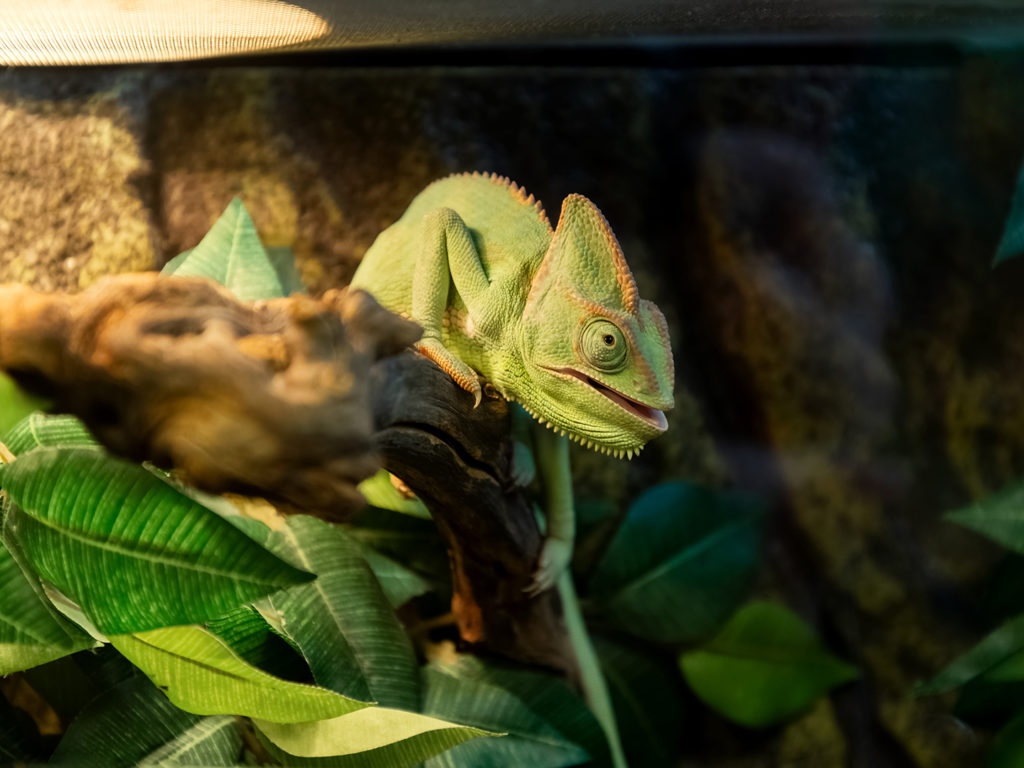
For our reptilian friends, though, having a safe and tidy environment is one of the best prevention methods against parasitic infections, according to Dr. Ashley Navarrette, a clinical assistant professor at the Texas A&M College of Veterinary Medicine & Biomedical Sciences.
Navarrette says that reptiles living in unsanitary environments are at a greater risk of contracting intestinal parasites, as these diseases are most often transmitted via the fecal-oral route. Typically, this is seen as a reptile ingesting contaminated eggs, insects, or other materials found in fecal material.
Parasite transmission also has been known to occur through wounds in a reptile’s skin.
Most captive reptiles get parasites from contact with other reptiles. This means it is imperative that owners are diligent in having veterinarian screenings of new reptiles entering the home, in addition to maintaining a clean environment for them to live in.
“So many disease processes can be prevented by proper husbandry,” Navarrette said.
Because reptile owners are not able to actually see many of the microscopic intestinal parasites that veterinarians are concerned with, it is important that owners are able to spot tell-tale signs of parasitic infections.
While clinical signs tend to vary from parasite to parasite, common symptoms are regurgitation, weight loss, diarrhea, bloating, and anorexia.
“If your reptile is suspected to have intestinal parasites, do not wait long to see your veterinarian,” Navarrette said. “Often, once reptiles start showing clinical signs, the disease is pretty advanced.”
In addition to a clean environment, another preventative measure owners can take is feeding their reptiles an appropriate diet. When an under-nourished animal experiences other health concerns, they tend to suffer more than those well fed because of their lack of reserves, potentially leading to an increased mortality risk.
Even if owners do not believe their reptile has a parasitic infection, Navarrette recommends that reptiles have a fecal examination by a veterinarian every six to 12 months as a preventative step.
Cleaning up after our pets may not always be the most of entertaining of chores, but for a reptile, it is one of the easiest ways to keep them safe from parasites or other diseases. The simple steps of proper cage management and nutrition will help our reptilian friends live long and healthy lives.
Pet Talk is a service of the College of Veterinary Medicine & Biomedical Sciences, Texas A&M University. Stories can be viewed on the web at vetmed.tamu.edu/news/pet-talk. Suggestions for future topics may be directed to editor@cvm.tamu.edu.
Sixty-three students, faculty, and staff were recognized at the Texas A&M College of Veterinary Medicine & Biomedical Sciences’ (CVMBS) 2022 Honors & Awards Ceremony on March 25.
“We are honored to recognize individuals who continue to lead through their contributions to the veterinary profession, commitment to educational excellence, and dynamic leadership,” said Dr. John August, the Carl B. King Dean of Veterinary Medicine at Texas A&M University. “We applaud our recipients for their academic achievements and the impact that they are making.”
American Academy of Veterinary Dermatology Student Award: Prudence Sun
American Animal Hospital Association Award for Proficiency in Primary Care: Ashley Dane-Gressman
American Association of Feline Practitioners Award: Allison Heflin
American College of Veterinary Internal Medicine Awards: Regan Lee, Lauren Minner, & Kaitlyn Upton
American College of Veterinary Ophthalmology Award: Michael Jimmerson
American College of Veterinary Pathologist Award for Excellence in Veterinary Pathology: Emily Hoskins
American College of Veterinary Radiology Student Award: Cambridge Coy
American College of Veterinary Surgeons Student Proficiency Award: Kaylee DeBusk & Kate Korchek
Arden G. Kemler Award: Benjamin Butler
Award for Proficiency in Veterinary Emergency & Critical Care: Kelsi Early
Bridges Teaching & Service Award: Dusty Nagy, Galen Pahl, & Ramesh Vemulapalli
CVMBS Excellence in Diversity Award: Katie McCool
CVMBS Veterinary Scholar Award: Daniella Burleson
Dechra Excellence in Dermatology Award: Cambridge Coy
Dechra Excellence in Equine Sports Medicine Award: Elizabeth Kearney
Dechra Excellence in Small Animal Internal Medicine Award: Cody Atkinson
Fred P. Jaggi Award: Shannon Wan
George T. Edds Award: Alina Roman-Hubers & Toriq Mustapha
Gerald Bratton & Charles Hall Clinical Neurology Award: Alex Vuong
Griffeth-Quick Cardiology Award: Nicole Meddaugh
John Milliff ‘28 Veterinary Award: Bridget Savitske
John Milliff ‘28 Veterinary Student Award: Mary-Birdsong Gabriel
John Paul Delaplane Award: Emily Bencosme-Cuevas
Juan Carlos Robles Emanuelli Teaching Award: Laura Bryan & Lucien Vallone
Kaytee Avian & Special Species Excellence Award: Amanda Day
L.P. Jones Pathology Resident Award: Sarai Milliron
Merck Innovation Award: McCalley Cunningham
Outstanding Graduate Student & Postdoc Mentor Award: Dana Gaddy
Outstanding PhD Student Award: Rebecca Legere
Outstanding Postdoctoral Research Associate Award: Caroline Sobotyk de Oliveira
Outstanding Research Leader Award: Paul Morley
Outstanding Research Support Award: Gus Wright
Outstanding Scientific Achievement Award: Heather Wilson-Robles & Kate Creevy
Outstanding Young Faculty Research Award: Jessica Galloway-Pena & Matthew Scott
Patton W. Burns Award: Jordan Jaafar
Proficiency in Theriogenology Award: Breanthony Baker
Richard H. Davis Teaching Award: Evelyn MacKay & Annie Newell-Fugate
Schubot Avian Health Director’s Award: Ty Tortella & Viridiana Martinez
Texas Veterinary Medical Association Research Award: Paul Morley
Texas Veterinary Medical Association Teaching Award: Benjamin Newcomer
Texas Veterinary Medical Foundation Earl Waddell Award: Andres Rivera Velez & Beth Lozano
Texas Veterinary Medical Foundation Johnson Memorial Award: Abbi Brock & Catrina Silveira
Texas Veterinary Medical Foundation Philanthropy Award: Michaela Baron & Patricia Randal
Texas Veterinary Medical Foundation Student Research Scholar Award: Andrew Brown & Morgan Gunn
Veterinary Cancer Society Bob Rosenthal Student Award: Allison Heflin
Veterinary Medical Teaching Hospital Clinical Service Award: Keith Chaffin, Mauricio Lepiz, & Guilherme Verocai
Wade Burton & Susan Hopper Veterinary Emergency Team Award: Sarah Manning
Walter “Dub” Ruoff Memorial Award: Carley Johnson
Winnie Carter Wildlife & Exotic Animal Award: Ashley Dane-Gressman
Zoetis Award for Veterinary Research Excellence: Kate Creevy
Zoetis Distinguished Veterinary Teaching Award: Carolyn Arnold
###
For more information about the Texas A&M College of Veterinary Medicine & Biomedical Sciences, please visit our website at vetmed.tamu.edu or join us on Facebook, Instagram, and X.
Contact Information: Jennifer Gauntt, Director of VMBS Communications, Texas A&M College of Veterinary Medicine & Biomedical Sciences, jgauntt@cvm.tamu.edu,979-862-4216
“The map apps were trying to get us away from the fire, but we were trying to go toward it,” said Kamryn Pursell, one of four fourth-year veterinary students who joined the VET on this deployment. “I didn’t realize how close we were going to be to the wildfires until our navigation apps kept trying to reroute us.”
The students arrived on March 20, and just that day three new fires sprang up and high winds rapidly expanded the already existing fires, requiring the team to continually make preparations to move in case the fires spread their direction while they saw what would eventually total more than 210 animals.
As a result, Pursell and classmate Jessica Olivarez, who were assigned to the large animal operation, didn’t have time for an orientation when they arrived in Eastland.
“Everything was happening superfast,” Olivarez said. “We basically dropped our bags off and headed out to the first set of coordinates and didn’t come back until after dark.”
Ongoing Emergency
The large animal response, a priority for the VET because of the large amounts of cattle in the region, faced a number of obstacles, including the ongoing wildfires. With the smoky conditions making it difficult for teams on the ground to see, they had to rely on aerial spotters looking for signs of live animals.
Because the fires spread so quickly, many residents were left with little time to organize evacuations of livestock animals, so the scenes that awaited the VET were devastating.
“It was incredibly sad, so we had to focus on what we could do to help,” Olivarez said.
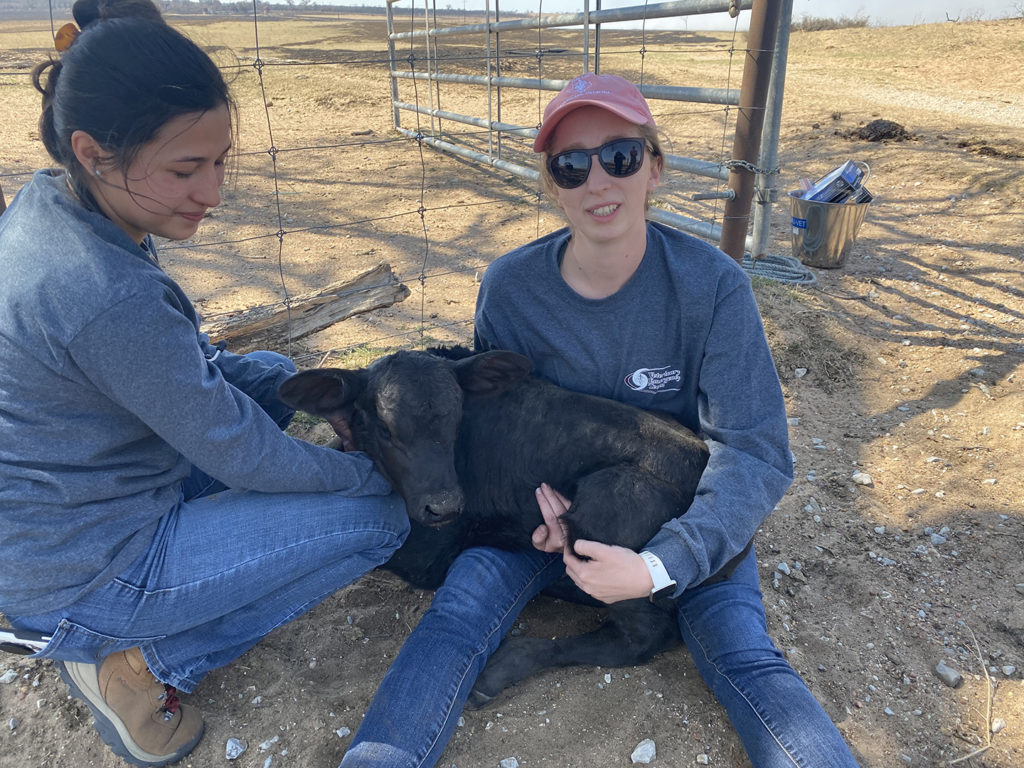
Jessica Olivarez and Kamryn Pursell with Smoky the calf
It was a tough assignment even for an experienced veterinarian like Dr. Laurie Shelton, who has volunteered on several VET deployments.
“Sunday was a rough day,” she said. “But the students rallied, they got dirty with the rest of us, they were willing to do some really hard work. I think they grew a lot as veterinarians in just a few hours and showed a ton of resilience.”
At one location, Olivarez and Pursell helped deliver a healthy calf, but even while Olivarez was treating it, a small fire crept toward her. Pursell went for help and the fire was put out.
The calf was later evacuated to a safe location, where the owner plans to bottle feed it.
Shelton said that during a tough deployment, one thing might happen to give you hope and that the students found that in the calf they later named Smoky.
“That calf was kind of a survivor story; it really helped them rally and be OK,” Shelton said. “Even with a lot going wrong, there are still good outcomes we can focus on.”
As difficult as it was, Olivarez and Pursell said they wished they could have stayed out longer.
“We were out until it was dark,” Pursell said. “That was tough, too, because you want to keep going—you want to keep helping—but when the sun is going down, you’re in danger because of the fires, so it’s just not safe to stay.”
Close To Home
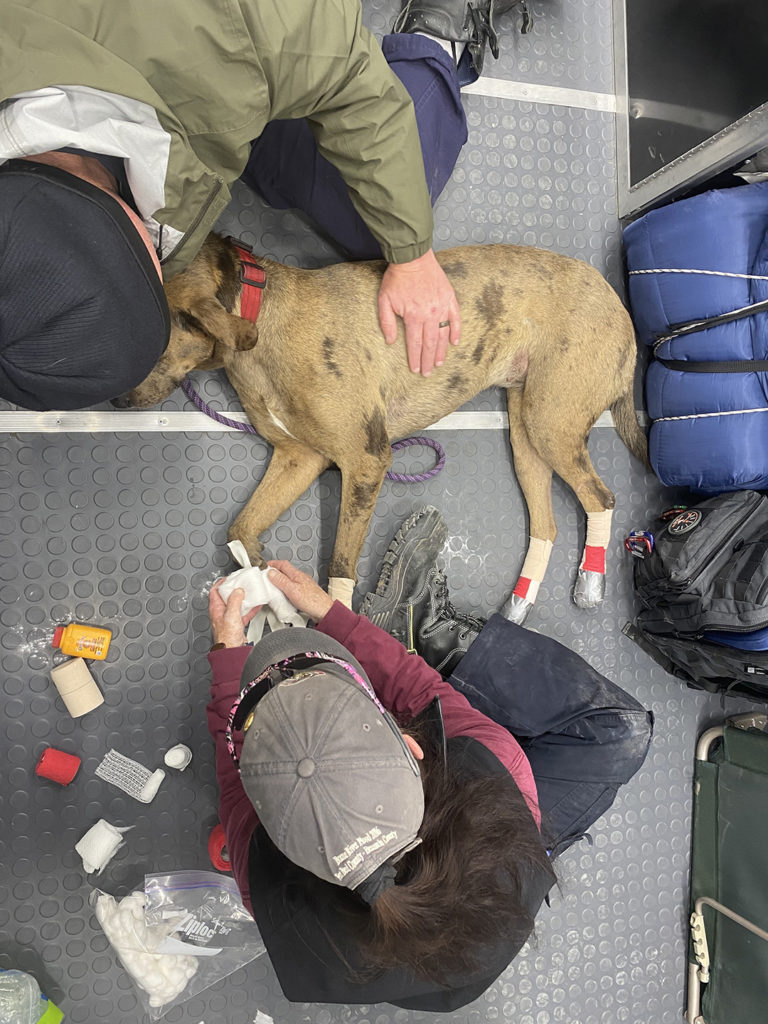
The students helped care for and prepare the search and rescue dogs deployed in the area by bandaging their paws.
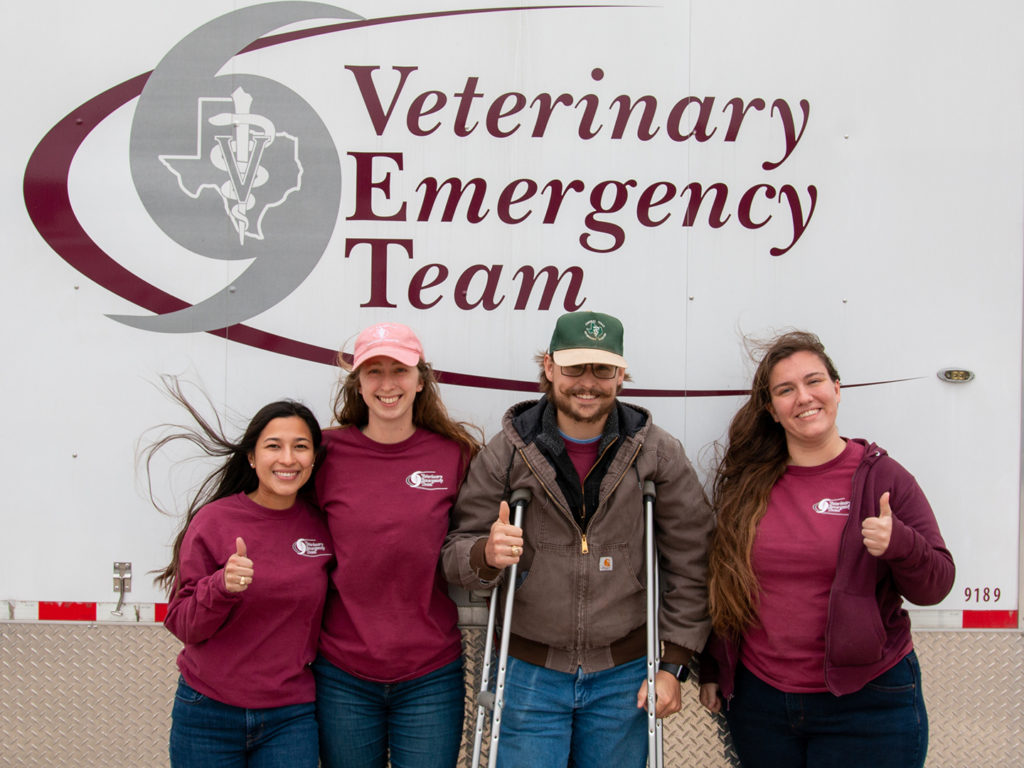
Fourth-year student Matthew Lewis wasn’t even supposed to deploy during his clinical rotation with the VET. Recovering from meniscus surgery and on crutches, Lewis and VET leadership had decided on his first day that if a deployment came, he was going to stay home.
However, as the week progressed, Lewis kept up with the news because his hometown of Brownwood was in the affected area. He even sent screenshots of the news to the other students, saying the fire looked like the kind of event the VET would be activated for.
The texts proved prescient; less than 12 hours later, the team was activated, and with the VET headed near his hometown, Lewis couldn’t sit it out.
“Even if I couldn’t really do anything, I wanted to be able to see the response up close,” he said. “I really wish I could’ve done more. I had been trying to stay updated on what parts of the community were affected and where the fires were starting. It’s intense and it hits close to home. Luckily, my family wasn’t in the path, but I know a lot of people who were.”
Lewis was assigned to the small animal operation with classmate Samantha Lowrey, and they, too, faced their own challenges.
“We saw a dog from a couple who had barely escaped their home,” Lowrey said. “They lost four dogs, but they found this fifth one. He had some burns, but we were able to patch him up. They were afraid they weren’t going to be able to afford medical treatment or find someone to take care of the dog, but we were able to help them, even if it’s only a small help.”
What seems like a small help is often actually a huge help, which is one of the defining traits of the VET, according director Dr. Wesley Bissett.
“I always tell our team and our students that you’re often seeing someone on their very worst day,” he said. “If you can make that worst day even a little bit better, if you can give them that little bit of hope, it can make a big difference.”
Along with treating household pets for burns, the students also helped care for and prepare the search and rescue dogs deployed in the area through things such as bandaging their paws, which was especially important because of hot spots on the ground or areas where fire may still have been burning.
Valuable Experience
When the initial call came, it didn’t take long for the students to say “yes,” and now that the deployment is over, they have a much deeper understanding of how emergency response works.
“One of the reasons a lot of us go into veterinary medicine is because we want to help people and our communities,” Lowrey said. “When you see a disaster happening, you want to help however you can. This deployment has given me a much deeper understanding of how exactly that happens and an understanding of why systems are in place. If you don’t know the system, you can actually do a lot more harm than good.”
Lowrey also said her time with the VET gave her a deeper appreciation for being an Aggie because of how involved different Texas A&M entities are in disaster response.
“I’m an Aggie, my parents are Aggies, and even I didn’t realize how involved Texas A&M was in emergency response,” she said. “You get here and there’s Texas A&M AgriLife Extension helping organize emergency food for livestock, the Texas A&M Forest Service providing the fire containment updates, and more. You really see how deeply Texas A&M is involved in helping the state of Texas.”
###
For more information about the Texas A&M College of Veterinary Medicine & Biomedical Sciences, please visit our website at vetmed.tamu.edu or join us on Facebook, Instagram, and X.
Contact Information: Jennifer Gauntt, Director of VMBS Communications, Texas A&M College of Veterinary Medicine & Biomedical Sciences, jgauntt@cvm.tamu.edu,979-862-4216